

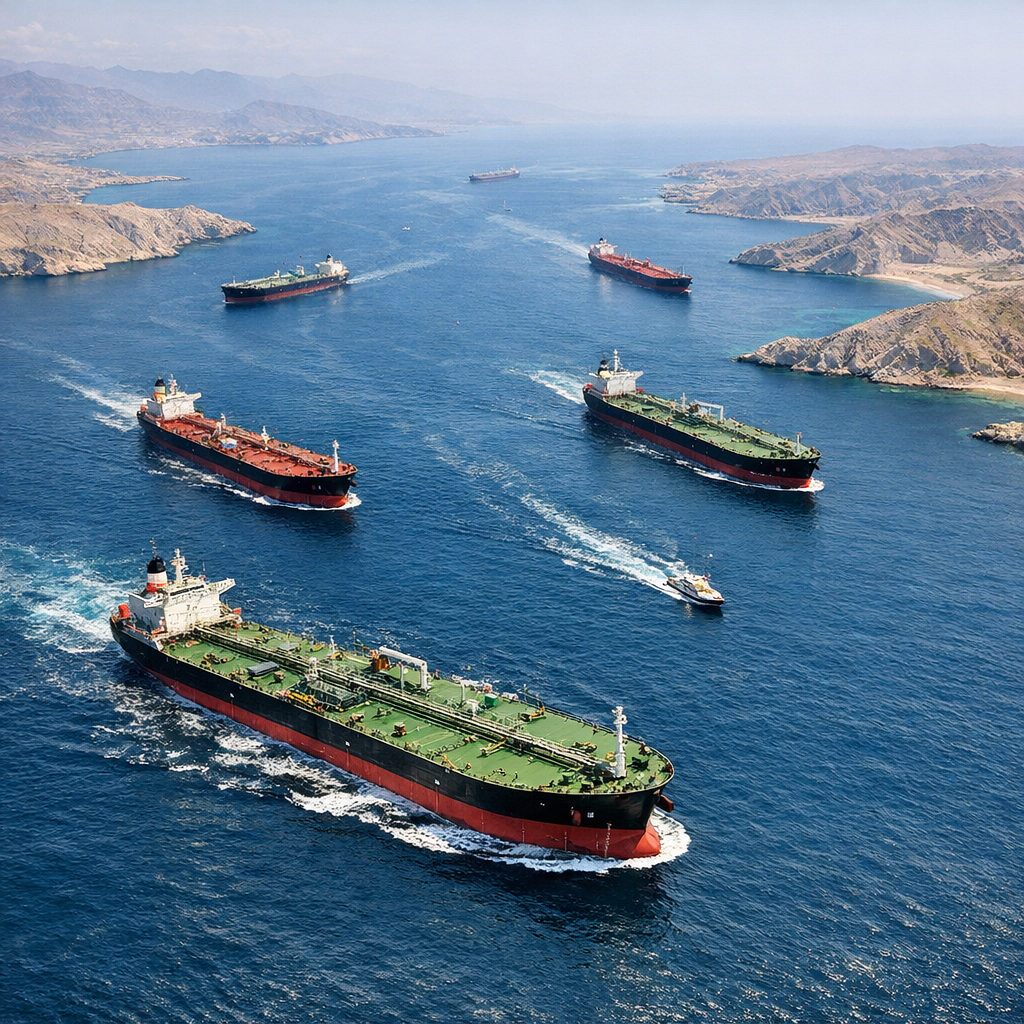
The Strait of Hormuz, a narrow passage connecting the Persian Gulf to the Gulf of Oman, serves as a critical artery for global oil transportation. Approximately 20% of the world’s petroleum passes through this strait, underscoring its strategic importance.
Geopolitical Tensions and Economic Impacts
Recent geopolitical developments have heightened tensions in the region. The U.S. has implemented measures to guide ships through the strait, aiming to ensure safe passage amidst rising hostilities. These actions have contributed to fluctuations in global oil prices, with Brent crude futures edging higher due to supply concerns. Source
International Responses
In response to the escalating situation, international bodies have called for diplomatic solutions to maintain stability in the region. The European Union and the United Nations have both emphasized the need for dialogue to prevent further escalation and to safeguard the free flow of commerce through the strait.
Local Implications
For residents of Miami Gardens, Florida, these international developments may seem distant. However, the ripple effects can be felt locally, particularly in terms of fuel prices. As oil prices fluctuate due to tensions in the Strait of Hormuz, consumers may notice changes at the gas pump, affecting daily commuting costs and the broader economy.
Looking Ahead
Monitoring the situation in the Strait of Hormuz is essential, as prolonged instability could have more profound economic implications globally and locally. Staying informed through reliable news sources will help residents understand how international events may impact their daily lives.